How can you tell if a diesel injector is bad?
Is Your Diesel Vehicle Showing These Warning Signs? Don't Ignore Your Fuel Injectors!
Diesel fuel injectors are the precise heart of your engine's combustion system. When they begin to fail, the symptoms are often unmistakable and progressive. Here’s a detailed look at the four key signs that your diesel injectors require immediate attention or maintenance:
1. Excessive or Abnormal Exhaust Smoke
This is one of the most visible indicators. Faulty injectors disrupt the precise air-fuel mixture and spray pattern, leading to incomplete combustion.
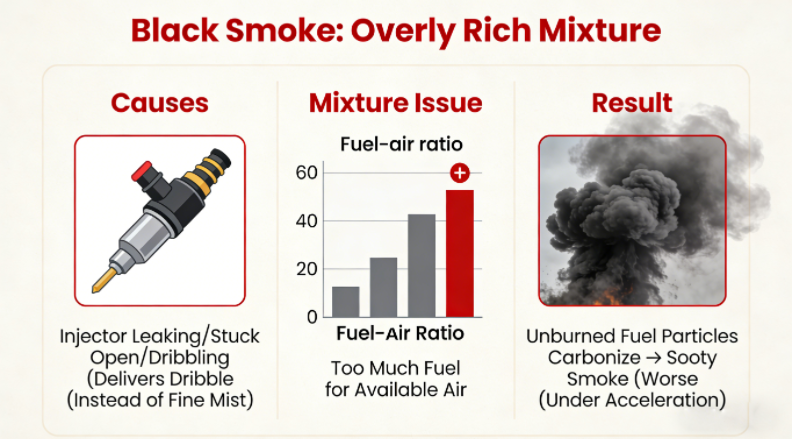
Black Smoke: Indicates an overly rich mixture—too much fuel for the available air. This is often caused by an injector that is leaking, stuck open, or delivering a dribble instead of a fine mist. The unburned fuel particles carbonize and exit as thick, sooty smoke, especially under acceleration.
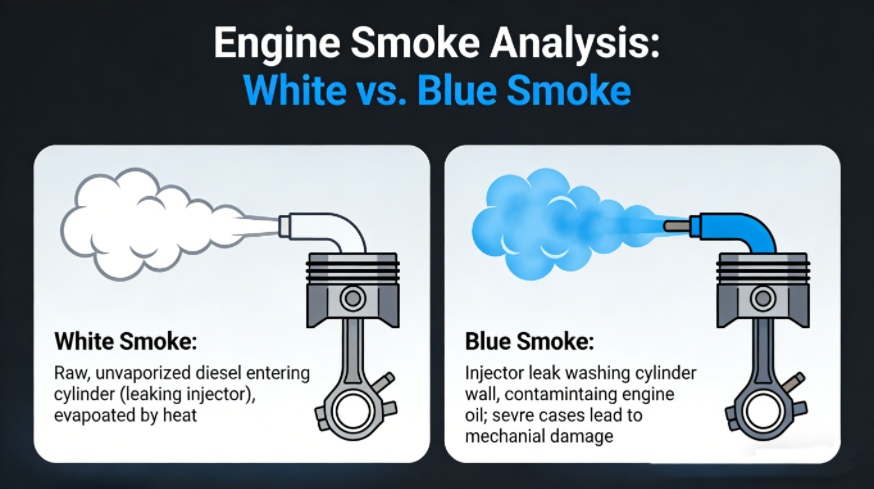
White or Blue Smoke: Suggests fuel is not burning completely or is mixing with oil. White smoke can mean raw, unvaporized diesel is entering the cylinder (from a leaking injector) and is simply evaporated by heat. Blue-tinged smoke often points to an injector leak washing down the cylinder wall, contaminating engine oil, or in severe cases, contributing to mechanical engine damage.
2. Rough Idling, Engine Misfires, and Vibration
A healthy diesel engine should run relatively smoothly, even at idle. Faulty injectors create an imbalance.
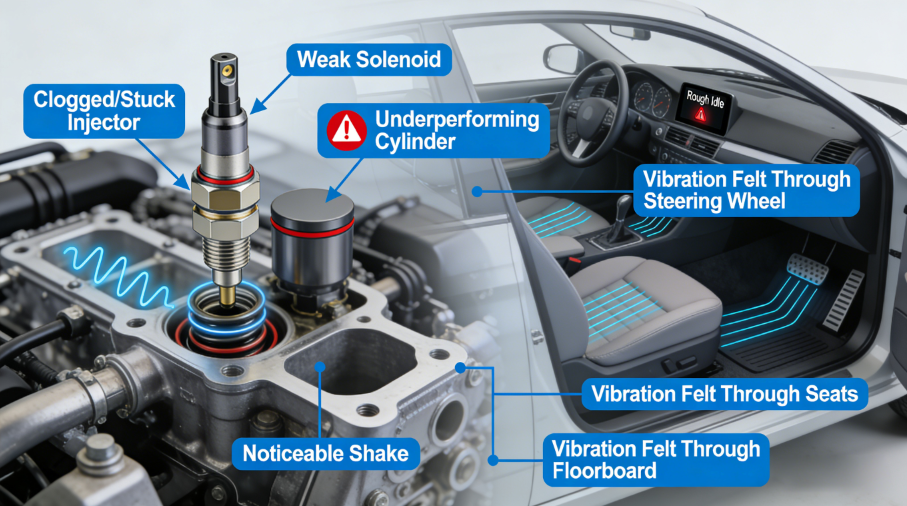
Uneven Power Delivery: An injector that is clogged, stuck, or has a weak solenoid will not deliver the correct amount of fuel at the right time. This causes its corresponding cylinder to underperform or "misfire," creating a noticeable shake, rough idle, and vibration that you can feel through the steering wheel, seats, and floorboard
The "Skip" Feeling: The engine rhythm feels inconsistent, and you may hear a distinct knocking or ticking sound emanating from the injector valley. In modern engines, this will almost always trigger the check engine light and log cylinder-specific misfire codes (e.g., P0301 for cylinder 1).
3. A Significant Drop in Fuel Economy
Your injectors manage the most expensive fluid entering your engine. When they are inefficient, you pay for it directly at the pump.
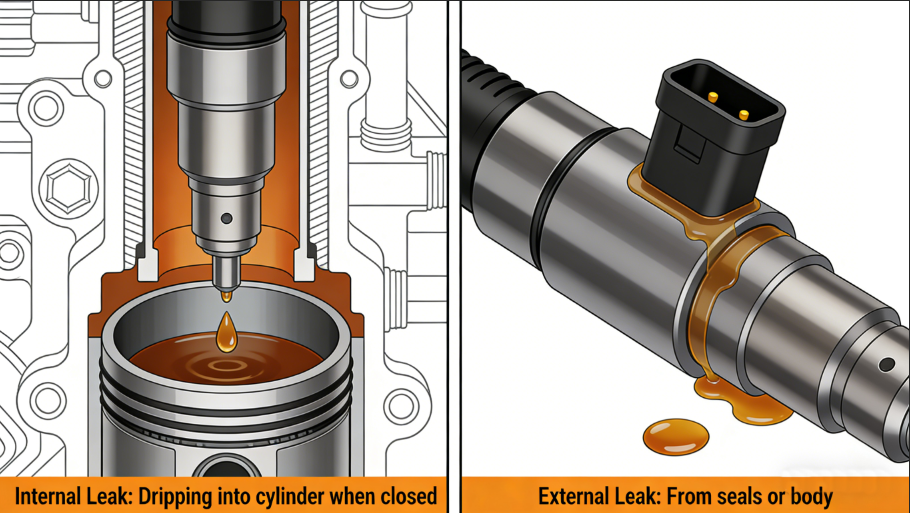
Leaking Fuel: An injector that leaks internally (dripping into the cylinder when closed) or externally (from seals or the body) wastes fuel constantly, even when the engine is off. This can be subtle but adds up quickly.
Poor Atomization: A clogged or worn injector nozzle cannot create the fine mist required for clean, efficient combustion. This leads to wasted, unburned fuel and forces the engine to work harder, consuming more fuel for less power. A drop of 2-4+ MPG can often be traced to injector issues.
4. Loss of Power, Sluggish Performance, and Hard Starting
Your engine's power comes from precisely timed explosions. Failing injectors starve it of the necessary fuel charge.
Lack of Power Under Load: You'll notice hesitation, poor throttle reaction, and a significant loss of low-end torque, making acceleration sluggish and towing or climbing hills difficult. The engine may feel "gutless."
Extended Cranking/Hard Starting: A leaking injector can allow fuel pressure to drain back to the tank, creating long cranking times before start-up. A clogged injector may simply not deliver enough fuel for a clean start, especially when the engine is cold. This puts extra strain on the starter and battery.
Proactive Maintenance is Key
Ignoring these symptoms doesn't just hurt performance—it can lead to catalytic converter damage (from excess fuel), increased engine wear, and catastrophic failure. If you notice any combination of these signs, a professional diagnostic at Fivestar Autocentre is critical. We can perform injector leak-down tests, electronic balance rate tests, and physical inspections to pinpoint the exact issue, saving you money on fuel and preventing more costly repairs down the road.
